


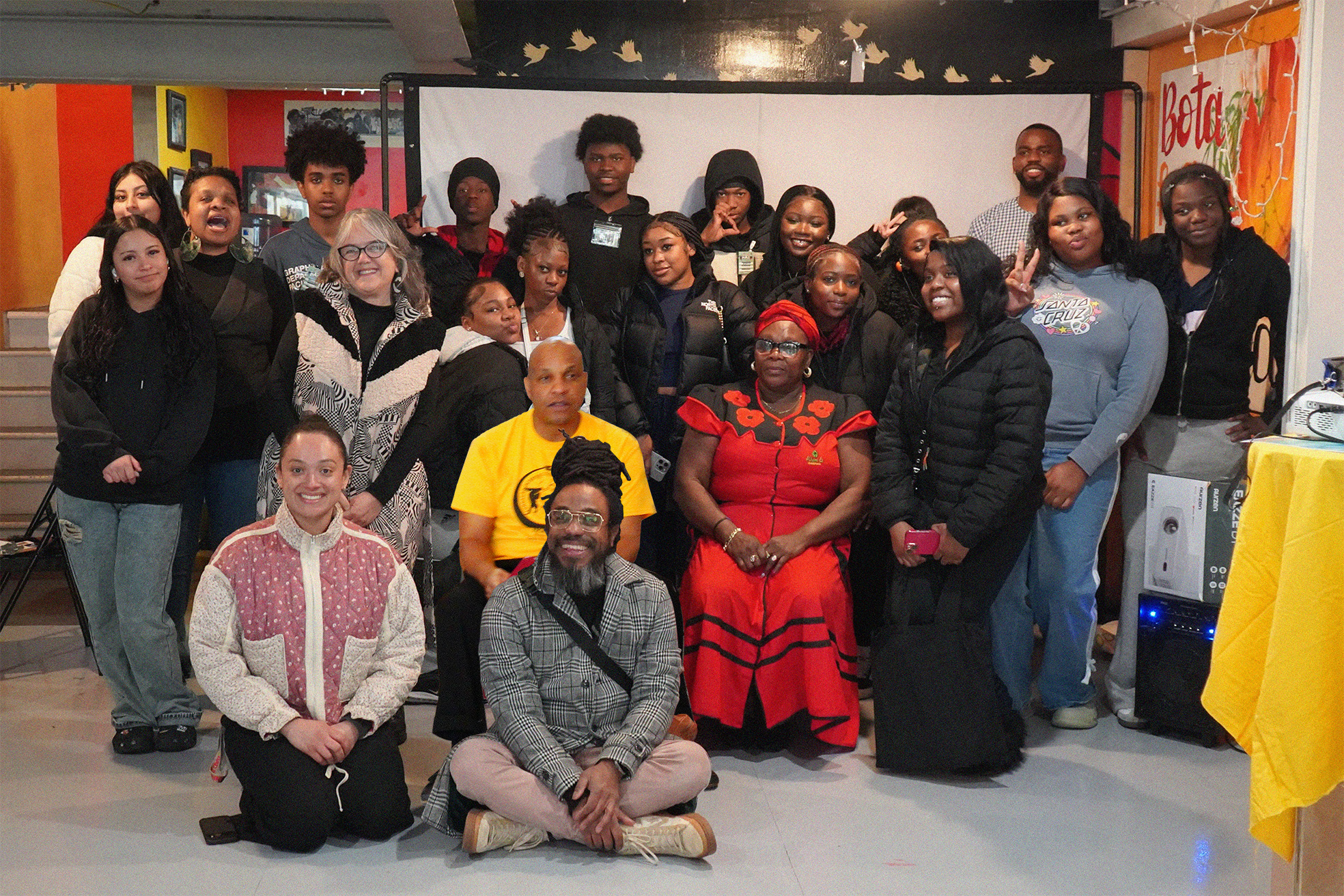
Over these past months, I have had the privilege of witnessing the Conectándonos MÁS Youth Program unfold not just as a series of workshops, but as a living, breathing space of connection, memory, creativity, and belonging. Each gathering has reminded me that youth leadership does not always arrive loudly or all at once. Sometimes it begins in a quiet moment: a young person choosing to share a thought, ask a question, try a movement, speak in front of their peers, or offer a piece of their story to the room. I hope my observation will convince you and your friends to come and bear witness, Saturday June 6 at El Centro de La Raza- Centilia Room from 1PM-5PM, to what the students have been doing for the last 3 months.
What I have witnessed most deeply is that this program is giving our youth a space to find and practice their voices. Not just in the sense of speaking out loud, but in the fuller sense of learning that their voice has history, weight, rhythm, and purpose. Some youth have shared that the program has helped them feel more confident discussing serious and unfamiliar issues. Others have reflected that they are learning how to communicate better, how to advocate for others, and how to understand themselves in relationship to their Afro-diasporic past. Those moments stay with me because they show that the learning is not only informational. It is personal. It is landing somewhere inside of them.
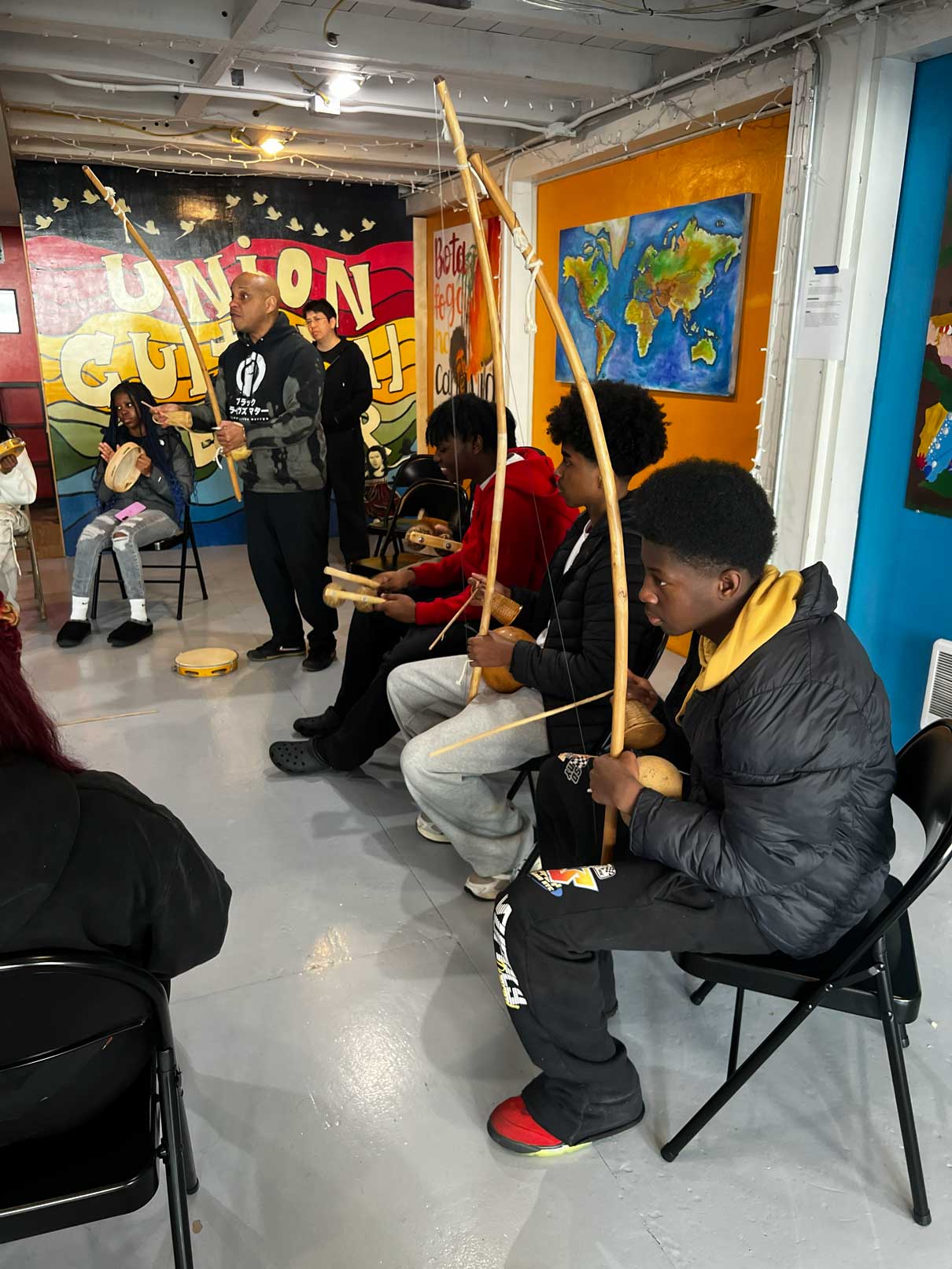
There is something very powerful about watching young people realize that history is not only something that happened before them. Through this program, they are learning that history also lives in the body, in music, in food, in dance, in family stories, in language, in resistance, and in the ways our communities continue to gather. Through Capoeira , Garífuna traditions, Bomba , storytelling, poetry, and collective art, the youth are being invited to experience Afro-Latinidad as something alive. They are not just reading about culture; they are moving through it, listening to it, questioning it, creating with it, and beginning to recognize themselves inside of it.
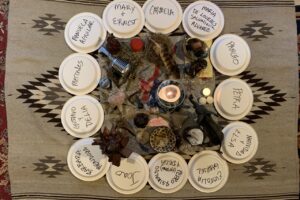
One of the moments that moved me was the Afro-Latinidad acrostic activity, where youth and adults named what came to mind when thinking about Afro-Latinidad. Words like Liberation, Culture, Hope, Identities, Ancestral soul, Strength, Resistance, Races, Pride, Love, Tradition, Blackness, and Community began to fill the page. In those words, I could see a shared language forming. A language of pride.
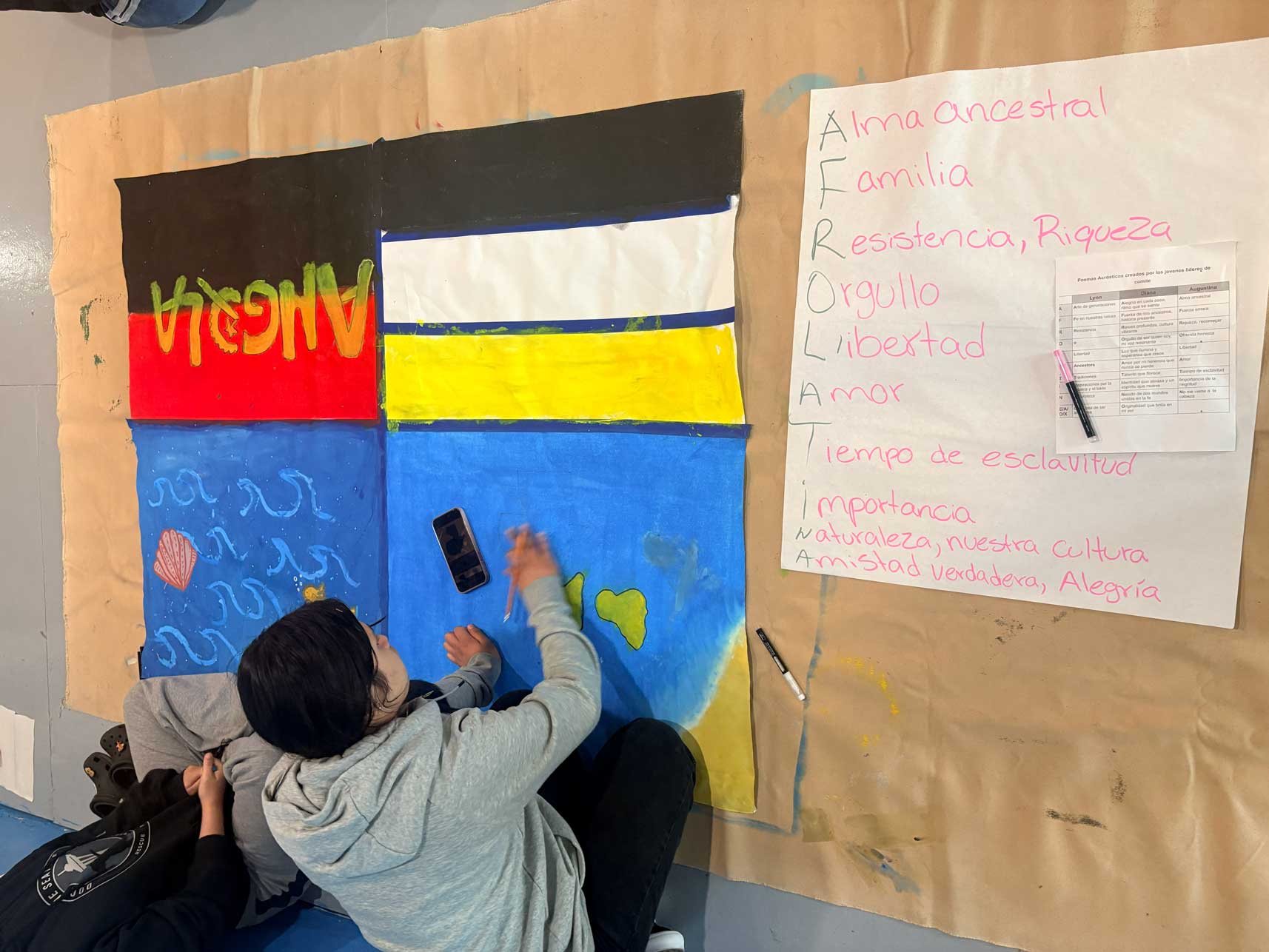
A language of return. I could also feel the youth stretching toward a deeper understanding of who they are and where they come from.
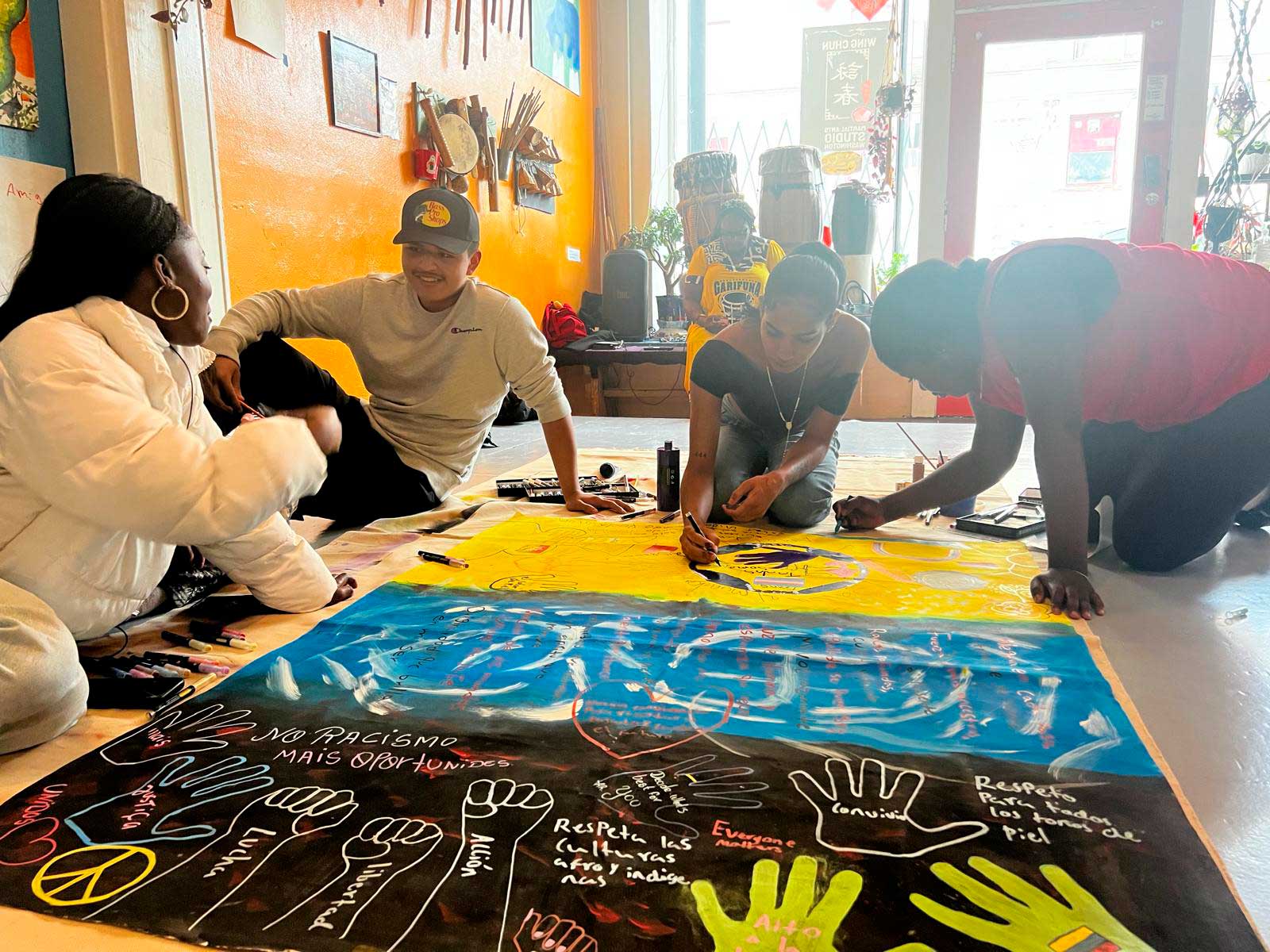
What is especially significant is the way the program creates a space for unity among different communities. Our young people come from different families, countries, languages, migration histories and cultural ties. Yet, within the program, they are invited to perceive the connections that exist between them.
They are learning that while our histories are not identical, many of our communities carry shared experiences of displacement, resistance, survival, creativity, and joy. They are learning that Capoeira- martial arts, Bomba- dance, Garífuna- language & music, and other Afro-diasporic traditions are not separate lessons, but different doorways into a larger story of Black resilience across the Americas.
I have also noticed how important it is for the youth to see culture held by real people. When artists come into the space and share not only their art form, but also their relationship to their people, their ancestors, their instruments, and their traditions, the room changes. The youth get to see adults who are still learning, still carrying, still practicing, and still choosing culture as a form of survival and expression. That kind of modeling matters. It tells young people that their identity does not have to be fully figured out to be honored. It can be explored. It can be practiced. It can be reclaimed piece by piece.
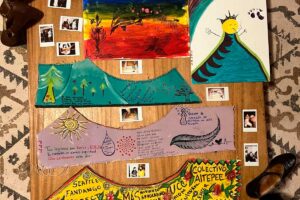
The collective canvas and community art projects have also offered another kind of voice. Some young people may not always speak first, but they will draw, move, take photos, organize materials, help with food, support a peer, or show up through the work of their hands. I have been reminded that leadership looks different for each young person. For some, leadership is speaking into a microphone. For others, it is making sure the space is ready. For others, it is helping a friend participate, remembering the rhythm, sharing a family story, or quietly becoming more comfortable in the room week after week.
This program has also shown me that youth leadership needs care, structure, and patience. We have seen youth step into committee roles, practice communication, support logistics, participate in creative planning, and prepare for the final celebration. We have also seen the very real learning edges that come with that: attendance, consistency, follow-through, confidence, and accountability. But rather than seeing those as failures, I see them as part of the work. These are the skills young people are here to practice. Community work asks us to learn how to show up, how to communicate, how to repair, how to take responsibility, and how to keep going.
I have been especially thoughtful about the ways young leaders are learning to take up space. Some youth are naturally more vocal, while others need more invitation, encouragement, or separation from familiar dynamics in order to discover their own leadership. I have also been reflecting on how we support young women and femme-bodied youth in feeling empowered to lead, especially in spaces or groups where boys may take up more room. These observations feel important because the program is not only about cultural education. It is also about practicing the kind of community we say we believe in: one where everyone’s voice has value, and where leadership is shared with intention.
The multilingual nature of the program has also been a beautiful and necessary part of the learning. Spanish, English, Portuguese, and the many cultural languages carried through music and movement all live in the space together. Interpretation, translated materials, and language planning are not simply logistics; they are part of how belonging is built. When a young person can hear, speak, ask, or participate in a language that feels closer to home, something opens. It reminds us that unity does not require uniformity. Unity asks us to make room for one another.
Some of the most tender observations have come from the small moments. A birthday being celebrated. A youth feeling more included because they could connect in Portuguese. Someone becoming excited to learn from an artist they were once nervous around. A young person putting on clothing that represented their identity. Youth laughing, dancing, eating, taking photos, or making connections through something as familiar as soccer, music, or shared food. These moments may seem small, but they are part of the foundation. Young people return to spaces where they feel seen.
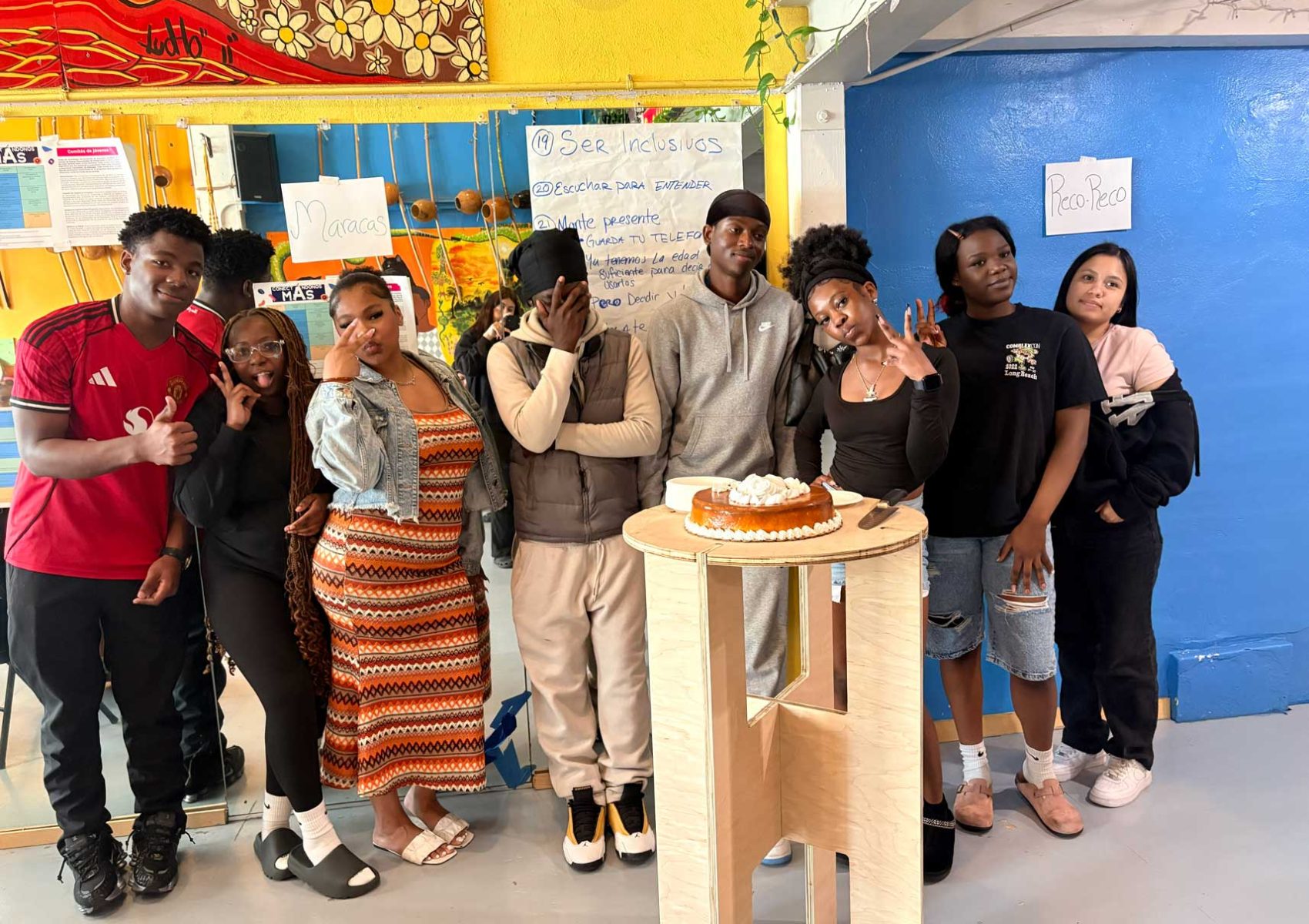
As we move toward the final celebration, I feel the weight and beauty of what has been cultivated. The youth are preparing not only to present a performance or an art project, but to share evidence of their growth. They are carrying forward new questions, new relationships, and a deeper understanding of the unity among our communities. They are learning that Afro-Latinidad is not only an identity marker, but a living relationship to history, ancestry, struggle, joy, and collective care.
What I am most grateful for is that this program does not ask youth to separate learning from feeling.. It allows them to bring curiosity, uncertainty, pride, shyness, excitement, grief, laughter, and discovery into the same room. It gives them permission to be in the process. . It gives them language for what they may have always felt but not always had the space to name.
To me, Conectándonos MÁS is a reminder that when young people are given culturally rooted spaces to gather, create, question, and lead, they do more than learn about history. They begin to locate themselves within it. They begin to understand that their voice is connected to the voices of those who came before them. They begin to see that our communities, though beautifully different, are tied together through memory, rhythm, resistance, and love.
And perhaps most importantly, they begin to believe that what they have to say matters.