



by Dr. Ileana Rodriguez-Silva, Professor, Department of History, University of Washington

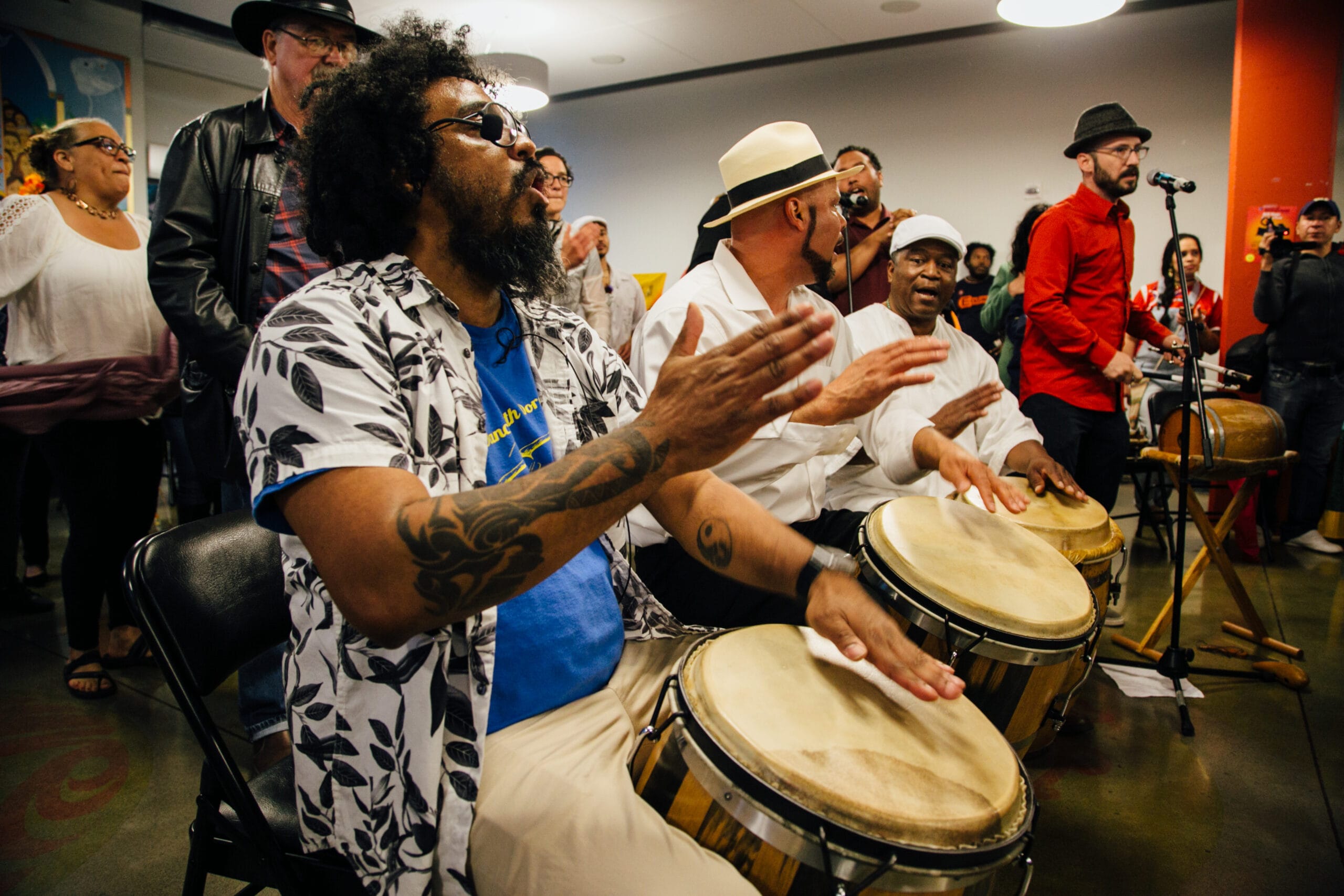
In many parts of Latin America and the Caribbean, the pregonerx is a central figure in daily life, even if no longer as numerous or central as in earlier times. This figure is rather associated with the now well-known street vendors in towns and neighborhoods, loudly singing contagious and humorous refrains (pregón/pregones), which were expanded by means of improvised lines to accommodate (or change) the mood of the audience or incorporate the news of the day and thus increase their sales. They delivered essential items (milk, fruit, fish, bread, biscuits, sweets) as well as services (knife grinding, watch repair, water distribution, etc.) to the villagers. The pregonerxs personify the rich and innovative artistic culture of the Latin American and Caribbean popular classes. They are a reminder of the primacy of orality in daily life in times past, an aspect of our lives at the moment that is most closely related to other means of communication such as the written word and visuality.
The figure of the pregonerx/x has its origins in the medieval Iberian Peninsula (for example, its first literary reference appears in the epic poem of Mio Cid, 12th century) and, later, with the expansion of the Spanish empire, it emerges immediately in colonial Latin America (16th – 19th centuries). These men were local government officials charged with disseminating a wide range of urgent government edicts and proclamations (proclamation/proclamations) related to the social ordering of the urban area, civil and criminal mandates and procedures, and public festivities and ceremonies. Depending on the place and the historical moment, the work of the town crier would be carried out by men of different races. For example, in early colonial Peru (1540s), these were mostly black African men, free or enslaved. The town crier’s work was always spectacular because they needed to attract the attention of the population and they had to create the appropriate tone for the reception of their message. Therefore, its performance was always theatrical (gestures and dress) and musical (including instruments and songs). With the expansion of the towns, these men had to visit different places within the urban area, which also included small towns that belonged to the jurisdiction. This mobility allowed the pregoneros to also become small vendors.
The market was the main place of the town criers. Allí competían y colaboraban por la atención de los consumidores con los vendedores de puestos y los ambulantes, muchos de quienes eran mujeres indígenas, africanas y mestizas. The market and the street were places of exchange and unregulated circulation of rumors, news, government proclamations, and articles between these historical actors. These working men and women transgressed the gender, race, and class boundaries that sustained the social order and were therefore subject to surveillance and censorship by colonial and, later, national authorities. It is in this context of competition, exchange and struggle that street cries came to be associated with street vendors and express so much creativity, humor and biting criticism. The development of new modes of disseminating information such as newspapers and the spread of literacy made the job of town crier as a government official obsolete. Yet, street vendors continue to be present today, battling through their ingenuity their marginalization from a highly capitalized marketing world. Their creativity and imagination have been the seed and inspiration of artistic expression for many throughout the centuries.
References/ References
*Lillián Illades, “The spaces of the proclamation,” New Worlds, New Worlds , November 2007
*Juan Manuel de la Serna, Pautas de convivencia étnica en la América Latina colonial: indios, negros, mulatos, pardos y esclavos (Mexico: UNAM, 2005), 47-48.
Photo credit: http://www.radiorebelde.cu/de-cuba-y-de-los-cubanos/desde-pototo-tomas-pregones-pregoneros-20120109/