


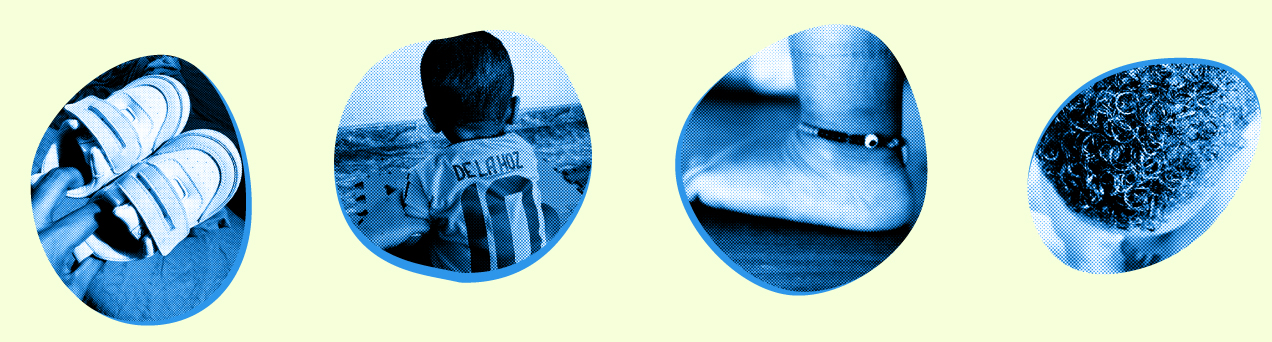
I always knew I would have to be ready to face racism. I did not suspect it , I knew it. My greatest fear was not whether it would appear (because it always does), but how I would confront it. How would I tell the mothers of my nephews, “We are black”, “your son is black”. How I would walk with them through that realization without letting it turn into guilt or shame.
For me, being an aunt is not simply affection or a family title. It is a shield. It is guardianship. It is the extension of a lineage that understands that the lives of our children are contested from the moment they are born.
My mother had been dreaming for months of becoming a grandmother. It was a quiet urgency, a mandate disguised as tenderness. As the eldest daughter, I felt the pressure, but I had just left a painful relationship. I did not want a child. I wanted space to breathe.
Instead, through my brothers, I became something else: the Afro-centered aunt. The only paternal aunt. In that unexpected role, I fell in love with my nephews as if they had come from my own body, and I also became their first line of defense against a racism no one had taught us to name inside our own home.
One afternoon, in my grandmother Rigoberta Blanco de Pérez’s house in María La Baja, with eight grandchildren gathered around — laughter, gossip — she suddenly said:
“That’s how it should be! No more dark grandbabies. Next time bring me some light-skinned ones.”
My grandmother, whom we all called “Mami” smiled proudly carrying her great-grandson Luis Rodrigo, the son of my cousin Biúlida Pérez Ospino, daughter of my childhood uncle and Margot, the noblest woman I have ever known. I replied humorously:
“Oh Mami, don’t count on me, I like my men dark as night.”
Laura, my cousin, the daughter of my aunt Cila and her late father Guillermo Calderón, added:
“Me too! And what are you talking about? My father was Black as the night!”
Mami replied:
“Well, back then there was no electricity.” We all laughed.
We all laughed, but beneath that laughter was discomfort. In that scene lived the full pedagogy of colonialism, the one that wants to lighten our skin, our hair, our destiny. In that scene were centuries of internalized racism disguised as affection.
And I understood that being anti-racist does not mean our family is. Nor that they want to be. There is not always bad intention; sometimes there is only ignorance, exhaustion, or fear. Structural racism has domesticated us so deeply that it can feel easier to stay silent than to name it.
It is not their fault, but it is our reality: the racist system has shaped the way we raise children, celebrate, relate to one another, and dream.
And that ideal is not reflected only in skin or hair. It lives in schools that do not teach our history, in impoverished territories, in jobs that never arrive, in spaces where our capacity to lead is still questioned. Racism is not an aesthetic discomfort; it is a structure that domesticates us, organizes our lives, and distributes dignity unequally.
The first De La Hoz of the 3rd generation was born.
When Francisco Manuel was born, the eldest son of Bebo and Gloria Charris, my comadre, I felt as if I could prevent any harm from ever touching him. I only wanted to see him, care for him, and feel the joy of watching him grow. Loving him has been the closest I have ever come to total commitment to love. Everyone in the house was in harmony; it was a family unity we had never experienced before.

What I did not imagine was that I would have to prepare answers to racist comments. No one tells you that. No one prepares the Afro-centered aunt to become mediator, educator, and shield within her own family.
– Was he born dark?
– The doctor said she gave birth to a big, dark baby — he’ll ‘come around,’- Bebo joked.
– What will his hair be like? Will he have ‘good hair’?
There is no good hair or bad hair,” I said. “There is only hair.
– What color will he end up?
He will be his color. You can’t expect him to have a Black father and be born with blue eyes and straight hair.
– That boy is going to have his mother’s hair.
A newborn’s hair isn’t its final texture. Once the lanugo falls out, we’ll see.
The expectation that Black babies be as little Black as possible is real, that they be as close to whiteness as possible. It begins with wishes, comparisons, and phrases that sound affectionate: “I hope he’s not too dark,” “I hope he doesn’t inherit that hair,” “Oh, but he looks just like his father’s side.” Beneath those words is fear of Blackness. A quiet struggle to distance ourselves from who we are, an absurd race to appear whiter, less Black.
And the cruelest part is that this mandate no longer needs to be enforced. It lives in advertising, in maternity wards, in digital filters, in family comments, in gifts chosen “because they match the baby’s complexion.”
In this way, aesthetic violence becomes inheritance, a symbolic debt each generation attempts to pay with its skin. Perhaps that is why I write: to protect, to preserve memory, so that my nephews grow up knowing their skin is not an error or a burden, but history and dignity.
The mothers of my nephews had never felt personally targeted by racism. Some had lighter skin; others believed racism happened elsewhere, to people “darker,” “rougher,” “more visibly Black.” They lived in a bubble where Blackness felt like a distant aesthetic rather than a daily reality. Everything changed when their children began receiving comments about their skin, their hair, their “resemblance.”
Case 1: The “Nice” Aunt
One of the mothers has to navigate an aunt who told her that her son “looks just like his father’s side of the family” and that, despite being Black, she herself is “nice.” In that context, the word nice is not an innocent compliment or a mere observation. It functions as a form of symbolic whitening:a linguistic strategy used to “compensate” for Blackness with a trait that makes it socially acceptable. What is being implied is not simply “she’s kind,” but “she is not so Black as to be rejected.” It is a way of saying: I can save you from stigma by attaching a socially valued quality to you, as if Blackness alone were not worthy of value.
The phrase “she is kind” does more than reveal prejudice; it exposes the persistence of a colonial standard that sorts Black bodies into the tolerable and the unacceptable. It is the legacy of “improving the race,” expressed in an affective register. The aunt does not speak from open hatred, but from what I call a “racist tenderness,” a paternalistic kindness that softens exclusion while still enforcing it.
And when he adds that the baby “looks like his father’s family,” she is not merely noting ressemblance, she is pointing out a difference that creates hierarchy. Kinship becomes a convenient explanation for devaluing the child’s Black features, as though they come from a lineage that is “less refined,” “darker,” “more visibly Black.” It is another maneuver of denial: displacing Blackness onto a nearby other — close, yet subtly marked as inferior — so that it does not have to be claimed as one’s own.
The paradox is evident: even within our own families, we find ourselves having to justify our existence. To say that a Black woman is “pretty” or “nice” as though she were an exception reinforces the idea that the norm is the opposite, that Blackness is not beautiful, that Blackness requires explanation, apology, or distance.
Case 2: The Guest in the House
Another baby lives with a “guest” in his own home, someone who makes racist jokes about his blackness and, more specifically, about his hair: “That hair is beyond fixing.” His mother, trying to protect him, uses products for curly hair; the child’s hair is beautiful and well cared for. Yet this adult, Black himself, though unwilling to recognize it, insists on repeating colonial stereotypes about “bad hair.” This is internalized racism at its clearest: the denial of one’s own Blackness projected onto a child.
There are people who do not know they are Black. People who carry our skin, our features, our ancestors, and yet deny that history. In that denial, they enact violence. They call them jokes, but they are wounds. They call them nicknames, but they are chains. They call it tradition, but they are technologies of dehumanization.
Internalized racism is no less violent than white racism. It is its intimate extension, the domestic reproduction of the colonial system. That’s why it hurts twice: because he arrives disguised as family. It must be met with both tenderness and firmness. With immediate response and consistent example. With every comment, a counter-narrative:
“There is no bad hair, there is only hair.”
“There is no skin that needs to be lightened.”
“No child is worth more for resembling a white standard.”
Internalized Racism and other colonization practices.
In many Black households, racism does not enter through the front door; it is already sitting in the rocking chair, woven into advice, embedded in the silences we were taught not to question. It appears in comparisons between cousins, in laughter that masks embarrassment, in words that sound affectionate but wound. That is why decolonizing the family is daily work: examining inherited phrases, breaking the pact of silence, and reclaiming who we are with love and without fear.

If racism can be learned at home, it can also be unlearned there. Not through silence or polite diplomacy, but through clarity.
I did not come to “manage” racism or its passive-aggressive versions; I came to confront it. I am not here to reinforce its technologies of dehumanization or to soften its blows with gentle pedagogy. I am here to dismantle the colonial strategies that try to take root in my nephews’ minds.
For every racist comment, a direct response.
For every microaggression, a boundary.
For every look meant to diminish my nephews, a look returned that says: “Not here.”
I will not accept jokes. I will not calmly “educate” the adult who believes they are being clever. I will name it racism. I will say it plainly, even if it creates discomfort. Because I would rather risk someone’s discomfort than allow a Black child to carry shame or injury.
In my home and in my family, there will be no fertile ground for colonial logics to keep operating. I will not allow “bad hair” to remain a punchline, “light skin” to be praised as superiority, or “pleasant resemblance” to serve as racism’s excuse.
My position is not negotiable: if you touch my nephews’ dignity, you touch the dignity of our entire lineage.
Internalized racism is not merely an internal issue; it is a tool of the colonial system. And it must be confronted the same way: by naming it, exposing it, and stripping it of its logic. Black families are not obligated to tolerate “ignorance” or “old customs” when those customs are the very ones that colonized our bodies for centuries.
Case 3: People Who Follow Me on Social Media, but Find Me “Difficult”
Once, a friend of one of my nephews’ mothers said to her, half gossip, half curiosity:
“How do you manage to talk to her? She seems difficult to approach.” She later told me about it.
I listened and smiled. I am not difficult to approach. I am clear. I am direct. I am protective. What happens is that I will not allow—passively or aggressively—anyone to discriminate against my nephews. I will not let jokes, comments, insinuations, or “mamadera de gallo” pass unchecked. My character is not inaccessible; my character is a wall against racism. And that wall is not there to keep good people away—it is there to stop violence.
Because to speak with me, only one thing is required: respect.
My nephews are not alone. Their hair, their skin, and their history will not be made into a joke.
I was not born to please racists or to soften my words. I was born to name, confront, and break the chain that tries to bind our people.
I was born so that my nephews can walk with their heads held high.
I was born to say that Blackness is not negotiable.
We are the end of their racism and the beginning of our freedom.
To name something is to break it. To confront it is to liberate. When a child hears their aunt or mother respond clearly—“that is racism,” “that is not accepted here,” that child learns that their body and identity have protection. That their Blackness is not negotiable.
The Monthly Photos (12).
Since Francisco Manuel, Manuel José, and Manuel Francisco were born, my role has been to watch, to care, and to name what happens around my nephews. Over the years, I have seen how something that seems innocent “monthly baby photos” has become a space where digital racism and status competition quietly operate.
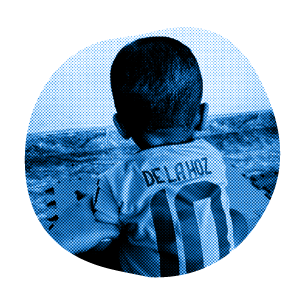
The trend of photographing babies every month, with elaborate sets, outfits, and well-known photographers, appears sweet and creative. But beneath it lies a colonial and classist expectation: that in every photo the baby appears less Black, more “presentable,” more “Instagrammable.” It is not just a trend, it is a system that blends racism with social hierarchy.
Once I saw someone post a photo of my oldest nephew. He looked so pale, with rosy cheeks and lips almost outlined, that it frightened me. I immediately wrote to his mother:
“Show me the baby, because in that photo he doesn’t look like himself.”
Another time, with as much patience as I could gather, I told another mother:
“I’m sorry, but that photographer is taking your money. Imagine your son looking at these photos when he grows up. He doesn’t look like himself at all. They are whitening him, erasing his face, his Blackness.”
I know it is not easy to say these things. I know they are not my children. But silence validates violence, and violence also lives in filters. Photographers apply retouches to erase “imperfections” that are actually the marks of lineage: the grandfather’s skin tone, the grandmother’s nose, the aunt’s hair. And parents, often caught within this aesthetic, accept it, pay for it, and compete over who can produce the most “sophisticated” photo.
What could have been an intimate act of memory becomes a symbolic battle between mothers, fathers and relatives. It becomes a race to appear more sophisticated, more “white” in the sense of social aspirations, more distant from everyday reality.
In the end, babies are trapped in a game they do not understand, yet one that places them very early within systems of racial and class hierarchy.
Those scenes filled with balloons, lights and elaborate outfits are not neutral. They are facades- signals that say “I can afford this”, “my child belongs to this standard”, “I am not from there”.
And when photographers edit images to erase skin tone, hair texture, or facial features, they reinforce the idea that beauty is a luxury, something accessible only through money, whitening, and social performance.
When I see all of this, I ask myself: When did memory become merchandise? When did photographs stop being testimony and become certificates of class?
I am not against taking photos or celebrating childhood. I am against children’s memories being constructed from the shame about their own image, from the idea that “being less black” is an achievement, and from the pressure to perform social status.
Our babies do not need filters to be beautiful. Their skin, their hair, their noses, their mouths are beauty, lineage, and resistance. Photographs should honor them—not whiten them. Memory without Blackness is a lie. And education, even when it is uncomfortable, is how we stop that erasure.
A Baptism
The image of a baby dressed in white, with a little bonnet, suspenders, and lace, appears innocent. But when we look at it through history, we see something else: a uniform inherited from colonialism, from ecclesiastical hierarchies, and from European standards that associated whiteness with purity and superiority.
Baptism outfits are not neutral. They come from a cultural framework in which the Catholic Church, during colonial times, played a central role in the enslavement and evangelization of African and Indigenous peoples. In that context, white came to represent “purity” and “civilization,” while Blackness was read as sin, barbarism, or backwardness. Dressing a baby in white was, quite literally, dressing them for social acceptance within that racialized world.
Today, more than two centuries later, we continue to replicate these traditions without questioning them. Those little bonnets, suspenders, and colonial-style baby suits evoke the aesthetic of “the colonizers’ children.” They reproduce an ideal of beauty that does not come from our Afro or Indigenous roots, but from European aristocratic households. Every detail—lace, caps, delicate buttons—echoes that past.
The racial charge lies not only in the color, but in the message: “purity” becomes synonymous with “whiteness”; “tradition” becomes synonymous with “European”; “elegance” becomes synonymous with distance from our own roots. In this way, baptism photos can unintentionally become a performance of status, where Afro-descendant babies are placed in costumes that erase their features, their color, and their heritage.
This is not about prohibiting or demonizing religious celebrations. It is about looking honestly at the origins of these practices and recognizing that dressing our children in colonial garments symbolically reproduces a history of subordination. We can celebrate life, faith, and family in ways that honor our roots—clothing that does not hide our skin or deny who we are in a moment meant to mark innocence and belonging.
Spirituality does not need costumes to be legitimate. And every baby deserves memories, whether in photographs or rituals, that reflect their truth, not an aesthetic inherited from oppression.