


The Garifuna people rise from a history of displacement and survival. The result of the forced encounter between liberated Africans and Carib and Arawak peoples in the insular Caribbean of the seventeenth century, their culture represents an Afro-Indigenous synthesis of resistance. The Garifuna, or Garínagu, transformed the violence of colonization into a collective identity that has preserved their language, spirituality, and bond with the land for more than three centuries.
In this Afrosaberes, we explore their history, their world vision, and current reality of this stateless nation, but with an oceanic soul. A people who, more than resisting, have learned to create and rebuild with every tide.
The Garifuna people were formed on the Caribbean island of Yurumein, today known as Saint Vincent, around the 17th century. There, Africans who had escaped the slave trade or survived shipwrecks joined with indigenous Carib and Arawak communities. From this mixture, a new identity was born: the Afro-Indigenous, a profoundly free people.
When the British invaded Yurumein in 1797, thousands of Garifuna were exiled to the nearby uninhabited island of Baliceaux. Hunger, disease, and exposure claimed more than half their lives. This event — engraved in Garifuna collective memory — stands as a colonial genocide.
After their defeat, the British gathered nearly five thousand Garinagu and banished them to the barren island of Baliceaux, where famine, exposure, and illness consumed more than half their number. In the spring of 1797, around two thousand survivors — carrying only the memory of their loss — were loaded onto ships and taken almost 1,700 miles away to Roatán, Honduras, the first shore where the Garifuna diaspora would take root.
From there, the Garifuna people dispersed along the coasts of Honduras, Belize, Guatemala, and Nicaragua, founding coastal communities that to this day preserve their language, spirituality and ancestral memory.
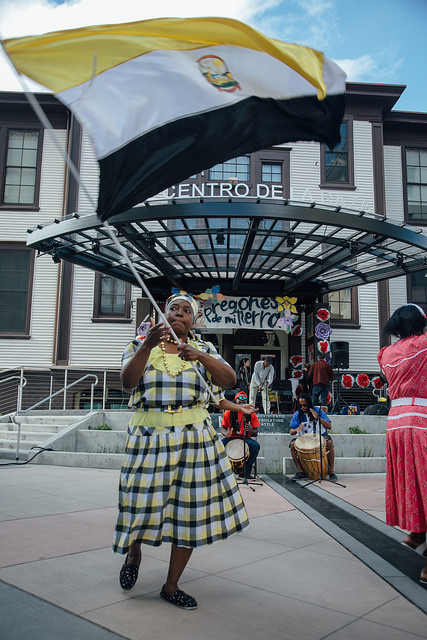
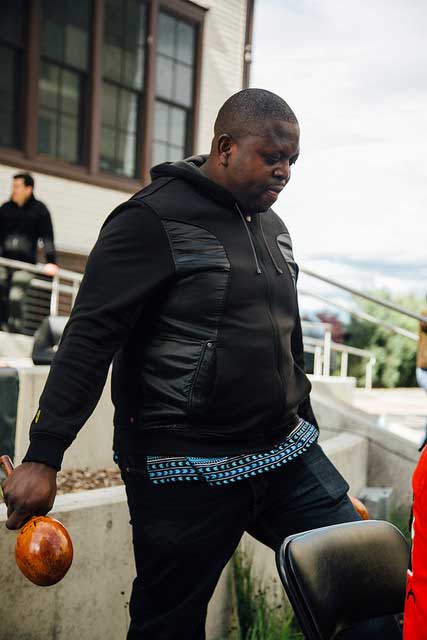
Their language, Garifuna, belongs to the Arawakan and Carib family, but bears traces of French, English, and African languages. It is more than a way of speaking: it is the thread that unites history with spirituality. In 2001, UNESCO declared the Garifuna language, music, and dance as Intangible Cultural Heritage of Humanity, recognizing their value.
The Garifuna language embodies one of the most remarkable expressions of Afro-Indigenous Caribbean history. With Arawak roots and Carib, European, and African influences, its structure preserves traces of the historical process that shaped the Garifuna people. One of its most striking features is the differentiation of speech by gender. Traditionally, certain words and expressions were used primarily by men or by women, reflecting the Carib roots (more present in masculine speech and Arawak in feminine speech). Far from being a mere linguistic curiosity, this duality mirrors the balance between masculine and feminine in the Garifuna worldview.
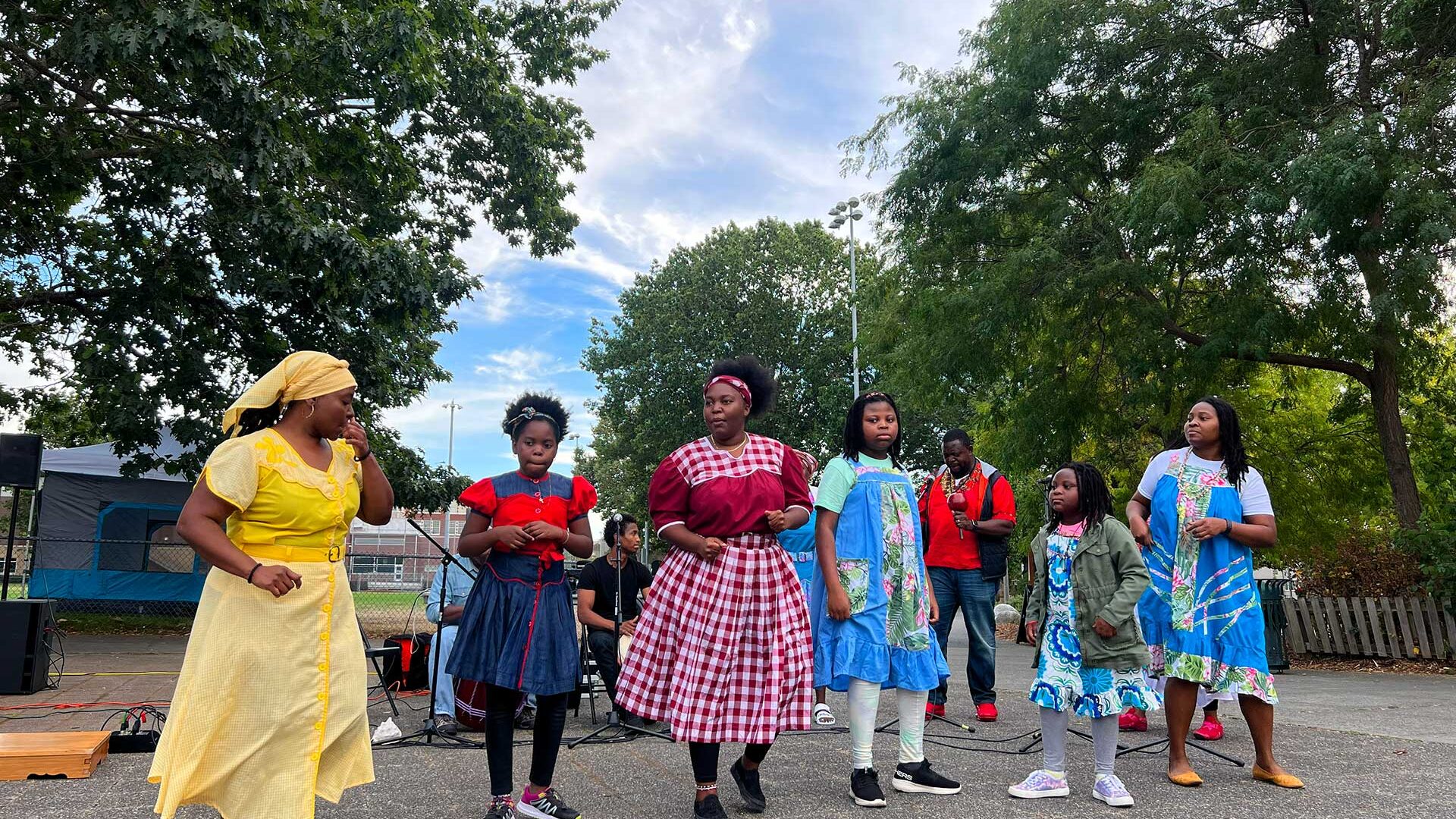
In daily life, women have been the primary guardians and transmitters of the language, teaching it to their daughters and sons, preserving songs, ancestral medicine, stories, and prayers that uphold the oral legacy in domestic and ritualistic spaces. Their role has been essential to the continuity of the language, while men have traditionally carried it into the public sphere through music, ritual, and community leadership.
In both cases, the Garifuna word not only communicates -it heals, remembers, and maintains the connection with the ancestors.
In Garifuna culture, language, body, and land form a single system of knowledge. Music, dance, and drumming are political and spiritual tools: they serve to educate, communicate, and heal. Garifuna dances such as la punta or el wanaragua (yankunu) are not folklore, but rather strategies of collective memory in the face of historical dispossession. Each word is a form of resistance.
Dugu, one of their most important spiritual ceremonies, embodies this connection with those who have passed away. Through song, offerings, and movement, the community seeks balance with the spirits, nature, and collective life.
“When the drum beats, we don’t dance alone.
Our ancestors are here, dancing with us.”
Garifuna women are the backbone that keeps their people’s culture and memory alive. They are bearers of the language, spirituality, and ancestral knowledge. Their role has been essential in the intergenerational transmission of knowledge. They are healers, midwives, singers, and educators, and from these spaces they sustain community and spiritual life.
Its social structure is matrilineal, which means that inheritance, moral authority, and family ties are traced through the maternal line. Today, many of them lead resistance processes against territorial dispossession, extractive tourism, and institutional racism. Organizations such as OFRANEH, have made visible the multiple forms of violence affecting their bodies and territories, affirming that to defend the land is to defend life itself.
Garifuna culture is not a Caribbean postcard , but a political, spiritual, and economic practice that weaves language, territory, and survival. Their cuisine, with dishes such as machuca or Hudutu (mashed plantain with fish and coconut soup), Filita, rice and beans, or cassava bread, reflects a relationship with the land and the sea that challenges extractivist and colonial logic.
Through medicinal knowledge, ceremonies, and celebrations, Garifuna communities preserve their cultural autonomy against attempts to folklorize or commodify them. Their culture is not an ornament nor a spectacle: it is a form of organization that sustains life and defends the territory.
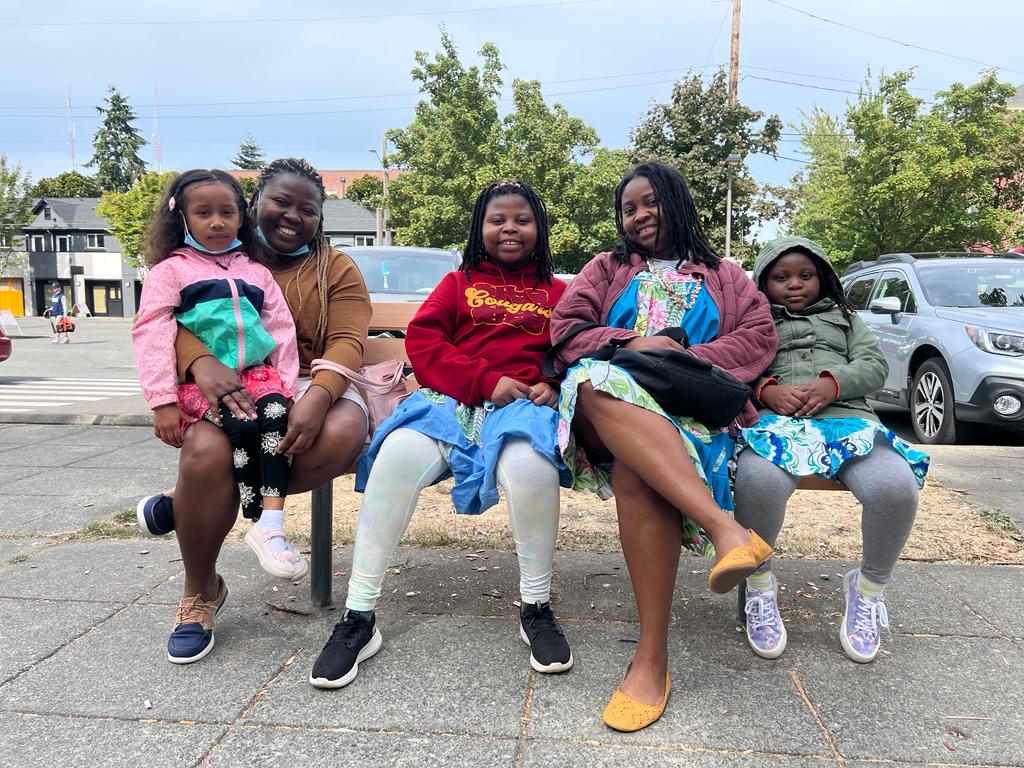
For the Garifuna people, territory is more than a piece of land: it is a living being that preserves the memory of their ancestors, the strength of their language, and the spiritual presence of the community. Protecting it is a political and collective action that ensures the continuity of the people and their right to exist. Across the Central American Caribbean, Garifuna communities have faced territorial dispossession and structural violence driven by tourism, mining, and energy interests. The loss of their lands has been met by the silence of states that justify the destruction under the guise of “development.” Although the Inter-American Court of Human Rights has ordered reparation and protection measures, such measures remain insufficient.
This pattern of dispossession and denial of rights is repeated among Afro-descendant peoples across the continent. In Colombia, Afro-Colombian, Raizal, and Palenquera communities experience similar processes of displacement, exclusion, and institutional racism. Another common thread among peoples of African heritage is the same historical wound: the continuation of colonialism in policies that deny their autonomy and transform their territories into sacrifice zones.
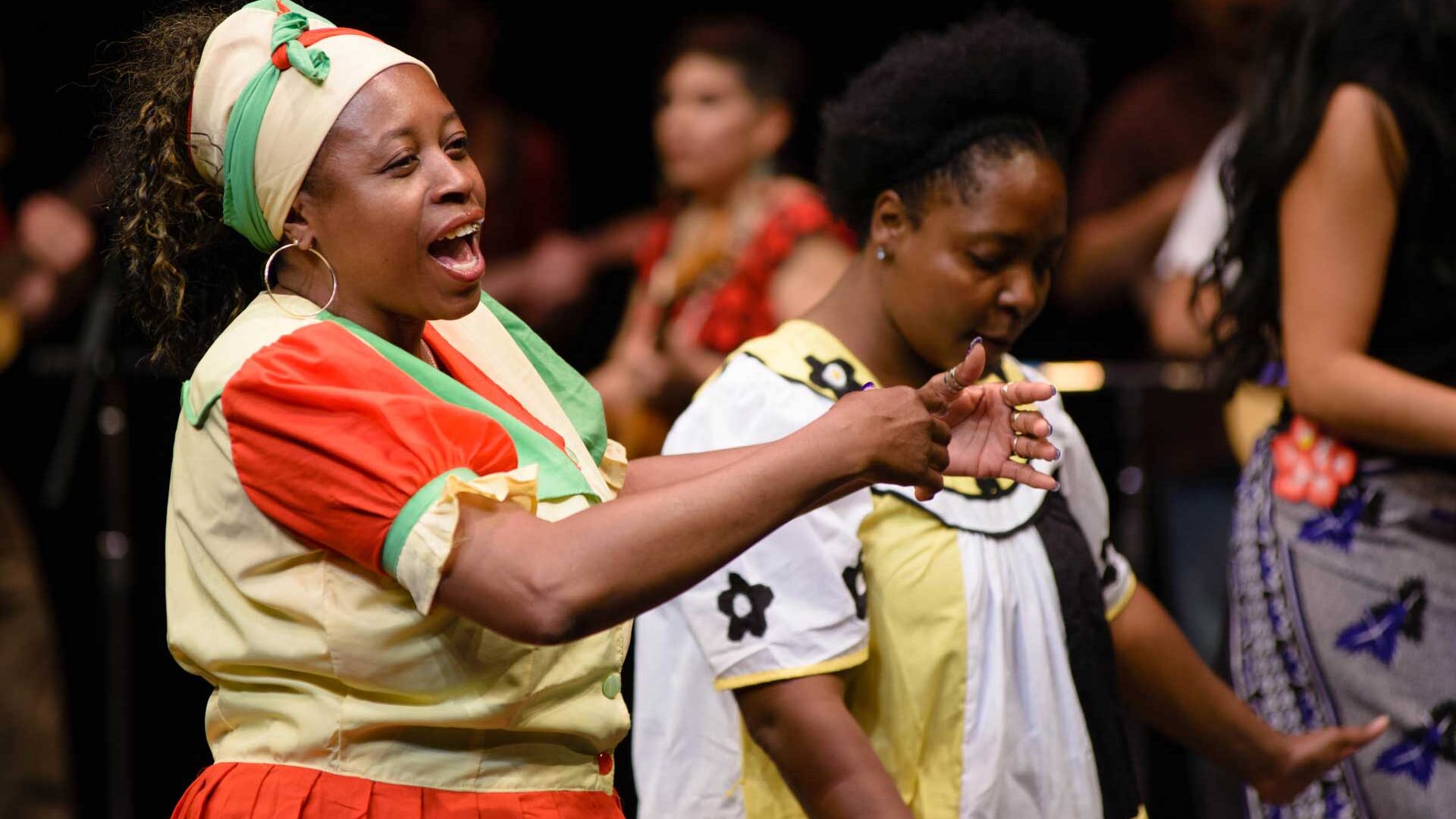
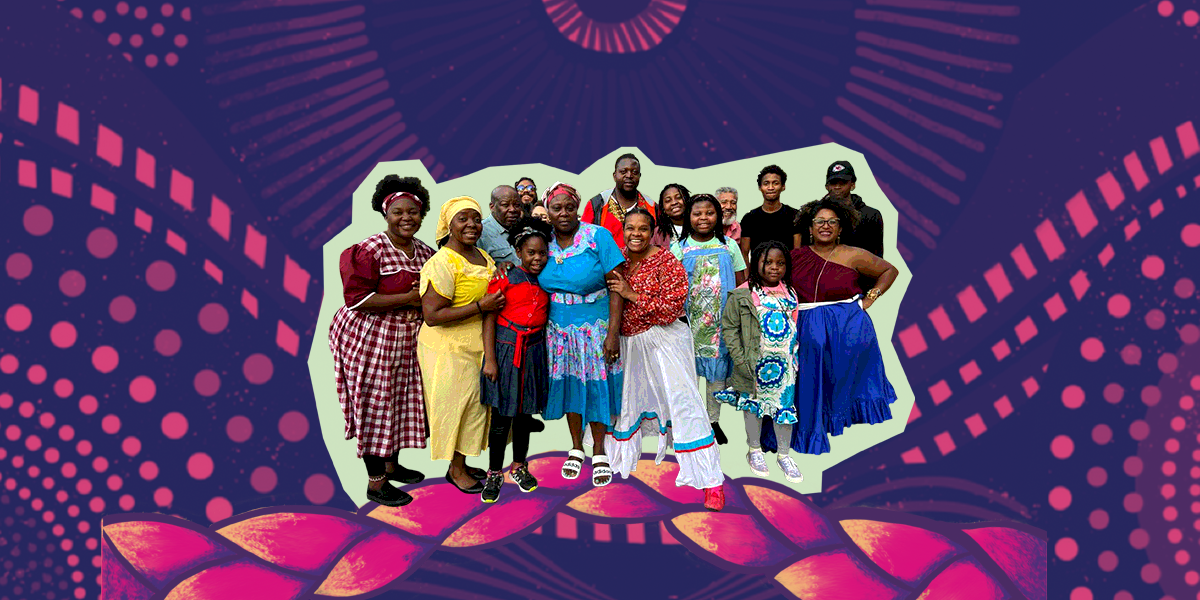
In conversation with Afrosaberes for MAS, two voices from our community- Wilbor Guerrero and Rony Núñez- reflect on what it means to be Garinagu far from ancestral shores, amidst contexts where racism, language loss, and migration mark new forms of resistance.
Wilbor Guerrero, a Honduran Garifuna living in Seattle, speaks from the perspective of organization and memory. He tells us a little about his community work with the organization Garinagu Houngua, devoted to keeping the language and intergenerational bonds alive. “Exile doesn’t erase roots, it only scatters them,” he says. Teaching the language, cooking fish, or playing the drum are, for him, acts of cultural affirmation. From a distance, the sea remains his teacher. Wilbor recognizes that women sustain the spiritual and linguistic foundation of the people: “Our strength comes from them; the mother is both school and altar. Without them, culture fades.” His discourse doesn’t idealize the community; it understands it as a contested network, where cultu
Rony Nuñez, a young Garifuna man from Guatemala, migrated to the United States as a teenager. He is the only son among five sisters and the first in his family to finish university, an achievement he considers a collective one. “If one advances, everyone advances,” he says. Growing up surrounded by women shaped his vision of leadership and caregiving. His reflection on racism stems from everyday experience: “Sometimes the privilege is not having to see violence. Racism doesn’t always shout; sometimes it ignores .” From his generational perspective, being Garifuna means rebuilding identity without essentialisms: teaching the language, dancing memory, creating safe spaces to speak from Blackness without fear.
Both voices reveal a living diaspora, defined not by loss, but by continuity. Garifuna, understood as a collective consciousness, is sustained by language, music, and the connection to ancestors. In every community gathering, in every child who learns a word in Garifuna, the existence of a people remade in movement is reaffirmed.
The Garifuna people remind us that resistance is not a metaphor, but a concrete, daily practice of organization, memory, and cultural continuity. Their history illuminates how Afro-descendant communities in the Americas have faced racism, dispossession, and exclusion without surrendering their language, their land, or thier dignity. Recognizing their legacy also means recognizing that the current struggles of the continent’s Afro-descendants are part of the same history of defending life. Getting to know the Garifuna people is not an exercise in cultural curiosity: it is a necessary political act to understand the depth of African roots in the Americas and the relevance of their demands for justice and recognition.